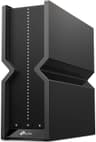
Best WiFi Router Prices
WiFi 6, WiFi 6E, and WiFi 7 wireless routers. 16 products.
Last updated today
Daily from Amazon
Router Buying Guide
Editor's Note
ISP-provided routers are almost always the weakest link in a home network — underpowered processors, limited RAM, and firmware that stops receiving updates within 2 years. Replacing it with a standalone WiFi 6 router is the highest-ROI networking upgrade for under $150. For gaming, wired Ethernet to a gaming PC eliminates every latency variable except the ISP itself. Where WiFi 7 earns the premium is in very dense multi-device households (30+ devices) or offices — for a family home under 2,000 sq ft, a good WiFi 6 router does everything needed.
— Zoltan Lukacsi, SmartValueLab
Editor's Pick
TP-Link Archer AX21
See Pick →WiFi 6 AX1800 at an entry price that beats most ISP-provided routers on performance and security update frequency. Dual-band with MU-MIMO, supports 1.5 Gbps WAN, and TP-Link's firmware has a consistent update track record. For homes under 2,000 sq ft with an internet plan under 1 Gbps, this covers all needs.
Budget
WiFi 6 router for home basics, $100-150
Mid-Range
WiFi 6E for whole-home coverage, $200-350
Premium
WiFi 7 or mesh for large homes, $400+
Common Mistakes to Avoid
- ⚠Keeping the ISP router in bridge mode but not replacing it — running your own router behind an ISP router creates double-NAT, which causes gaming lobby issues; put the ISP modem in bridge/passthrough mode so only your router handles NAT
- ⚠Placing the router in a closed cabinet or behind the TV — WiFi signal attenuates through walls and furniture; the router should be central, elevated, and unobstructed for maximum coverage
- ⚠Buying WiFi 7 for a 500 Mbps internet plan — your internet plan is the bottleneck, not your router; WiFi 7's multi-gigabit throughput only matters when your WAN speed exceeds 2 Gbps
Specs Explained
Related Use Cases
Price:
16 Router products
Sort:
| # | Product | Warranty | Score | Price | Buy |
|---|---|---|---|---|---|
| 1 |  TP-Link Archer AX73 AX5400 WiFi 6 RouterBest value TP-Link$116.99 Check Price on Amazon | 2 years | 85 | $116.99 | Check Price on Amazon |
| 2 |
Related Resources
Best WiFi Routers →Budget WiFi Routers Under $100 →Guide: How to Choose the Best WiFi Router in 2026 →Guide: Best WiFi 6E Routers 2026: Coverage, Speed & Setup Guide →Guide: Best WiFi Router Under $150: Budget WiFi 6 Picks →Guide: WiFi Extender vs Mesh: Which Should You Buy? →Guide: WiFi Speed Test: How to Test Your Connection & Improve Performance →Guide: Best WiFi 6E Routers for Whole-Home Coverage →Guide: WiFi 6 vs WiFi 6E — Speed, Range, and When to Upgrade →Guide: Best WiFi Routers Under $75: Budget-Friendly Picks →