G.Skill Settles $2.4M RAM Speed Case: What to Check
G.Skill paid out a $2.4M settlement for advertising DDR5 speeds that require BIOS changes to enable. Here's what DDR5 buyers need to know about XMP and EXPO.
G.Skill agreed to pay out a $2.4M settlement after a class action lawsuit alleged the company misled buyers about memory speeds on DDR4 and DDR5 products. The complaint: G.Skill advertised speeds like DDR5-6000 or DDR4-3600 without disclosing that reaching those speeds requires a manual BIOS step to enable. Individual payouts run $4.92 per qualifying product, up to $24.60 per claimant, and are now being distributed to those who filed before the April 7, 2026 deadline.
The default speed gap
Every DDR5 kit ships at 4800 MHz by default. Every DDR4 kit ships at 2133 MHz. Those are the JEDEC baselines: the speeds guaranteed to work on any compatible motherboard without configuration. The speed printed on the box (DDR5-6000, DDR4-3600, etc.) is an XMP or EXPO profile: a tested overclock the vendor guarantees, but one that only activates if you enable it in BIOS.
G.Skill's kits work correctly once that profile is enabled. The lawsuit was about disclosure. Plaintiffs argued that G.Skill's packaging and retail listings presented the overclocked speed as a factory default, with no mention of the BIOS step required to reach it.
What changes going forward
As part of the settlement, G.Skill agreed to describe rated speeds as “up to” figures and add visible warnings on packaging and product pages stating that the advertised speed requires BIOS configuration to activate. Similar disclosures are expected at retail listings where G.Skill supplies the product details.
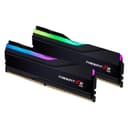
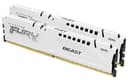
The G.Skill Trident Z5 32GB DDR5 and comparable kits like the Kingston Fury Beast 32GB DDR5 both require XMP or EXPO activation to reach their rated speeds. If you have installed a kit and not checked your BIOS, open CPU-Z and look at the memory frequency: if it shows 4800 MHz, the profile is not active and you are running well below what you paid for.
Frequently Asked Questions
Why doesn't my DDR5 RAM run at its advertised speed?
DDR5 defaults to 4800 MHz on first boot regardless of what speed is printed on the box. The labeled speed (DDR5-6000, DDR5-7200, etc.) is an XMP or EXPO profile that only activates when you enable it in BIOS. Without that toggle, you are running at 4800 MHz. This applies to all consumer DDR5 kits from every brand, including G.Skill.
Are G.Skill RAM kits still worth buying after this settlement?
Yes. The settlement covered a labeling and disclosure issue, not a defect in the memory cells. G.Skill Trident Z5 and Ripjaws kits still perform as rated when XMP or EXPO is enabled. As part of the settlement, G.Skill agreed to add 'up to' language to speed ratings and packaging warnings about the required BIOS step, a disclosure improvement, not a product recall.
Do other RAM brands use the same XMP/EXPO system?
Yes. XMP (Intel) and EXPO (AMD) are industry-wide standards. Corsair, Kingston, TeamGroup, and Crucial all ship kits that default to JEDEC speeds until you enable the XMP or EXPO profile. The G.Skill lawsuit was the first major settlement to force explicit disclosure of this behavior on packaging and retail listings.