Sandisk Launches NAS-Optimized SSDs: SATA and PCIe 5.0 Lines
Sandisk's new NAS 600 SATA and NAS 800 NVMe SSDs target prosumer NAS builds with 24/7 ratings, 2,500 TBW and 14 PBW endurance. Arriving September 2026.
Sandisk announced two new SSD lines on August 20, 2026 built specifically for NAS environments: the NAS 600 (SATA) and the NAS 800 (PCIe 5.0 NVMe). Both are rated for continuous 24/7 operation at temperatures up to 70°C. Worldwide availability is targeted for September 2026.
Specs that matter for NAS workloads
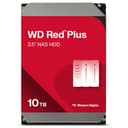
The NAS 600 is a 2.5-inch SATA III SSD covering 500GB to 4TB. Sequential reads reach 560 MB/s with 86,000 random read IOPS. At the 4TB capacity, endurance is rated at 2,500 TBW (terabytes written) with a 2.25 million-hour MTTF — a flash-specific endurance spec with no direct HDD equivalent. The WD Red Plus 4TB, by comparison, doesn't carry a TBW rating at all; Western Digital rates it for 180TB/year of sustained workload instead, since HDDs fail mechanically rather than from write-cycle wear. What the NAS 600 actually buys a NAS build is silent, vibration-free operation and consistent low-latency performance under sustained random I/O — multi-user file serving, continuous backup targets, or VM storage that sees writes around the clock.
The NAS 800 is an M.2 2280 drive on PCIe 5.0, scaling from 960GB to 7.68TB. Sequential reads peak at 14,900 MB/s with up to 2.3 million random read IOPS. The largest capacity is rated at 14 PBW (petabytes written), a number normally seen on enterprise U.2 drives. For a Synology DS923+ using its M.2 cache slots, the raw PCIe 5.0 throughput is irrelevant: a 10GbE NAS network saturates at roughly 1,250 MB/s. The selling point is the endurance rating and the guaranteed 24/7 operational spec, not the speed ceiling.
Which NAS users this actually serves
Before this launch, the options for NAS-optimized flash storage were consumer SSDs without a 24/7 endurance rating or enterprise U.2/U.3 drives that require adapters and cost significantly more. The NAS 600 slots directly into the SATA bays of a Synology DS223 or a QNAP TS-233 without any hardware changes. The NAS 800 fits the M.2 cache slots on prosumer NAS units that support them. Neither product is available to order yet; the September 2026 launch window is the earliest either drive can be tested in a real NAS build.
Frequently Asked Questions
Are Sandisk NAS SSDs better than WD Red Plus drives in a NAS?
Different tradeoffs, not a straight upgrade. The NAS 600 SATA 4TB carries a 2,500 TBW rating, a flash-specific endurance spec. HDDs like the WD Red Plus 4TB don't carry a TBW rating at all. Western Digital rates it for 180TB/year of sustained workload instead, since a hard drive's failure mode is mechanical wear, not flash write-cycle exhaustion. For capacity per dollar, HDDs still win at 8TB and above. The NAS 600 makes sense for a 2-bay all-SSD NAS where silent, vibration-free operation and 24/7 rating matter more than cost per terabyte.
Does the Sandisk NAS 800 NVMe work in a Synology DS923+?
Physically, yes. The DS923+ has two M.2 2280 NVMe SSD slots for cache or storage pooling, and the NAS 800 uses the M.2 2280 form factor. Synology's official compatibility list may take time to add new drives after the September 2026 launch date, so verify before ordering. The speed ceiling here is your network: even a 10GbE connection caps at roughly 1,250 MB/s, well below the NAS 800's 14,900 MB/s rating.
When do Sandisk NAS SSDs go on sale?
Sandisk announced both drives on August 20, 2026 and set a worldwide launch for September 2026 through Sandisk.com and select retail partners. Final pricing was not confirmed at announcement.